
Part One: The Character Question: Michele Tafoya and the Empathy Gap
What Michele Tafoya’s own words reveal about empathy, judgment, and leadership

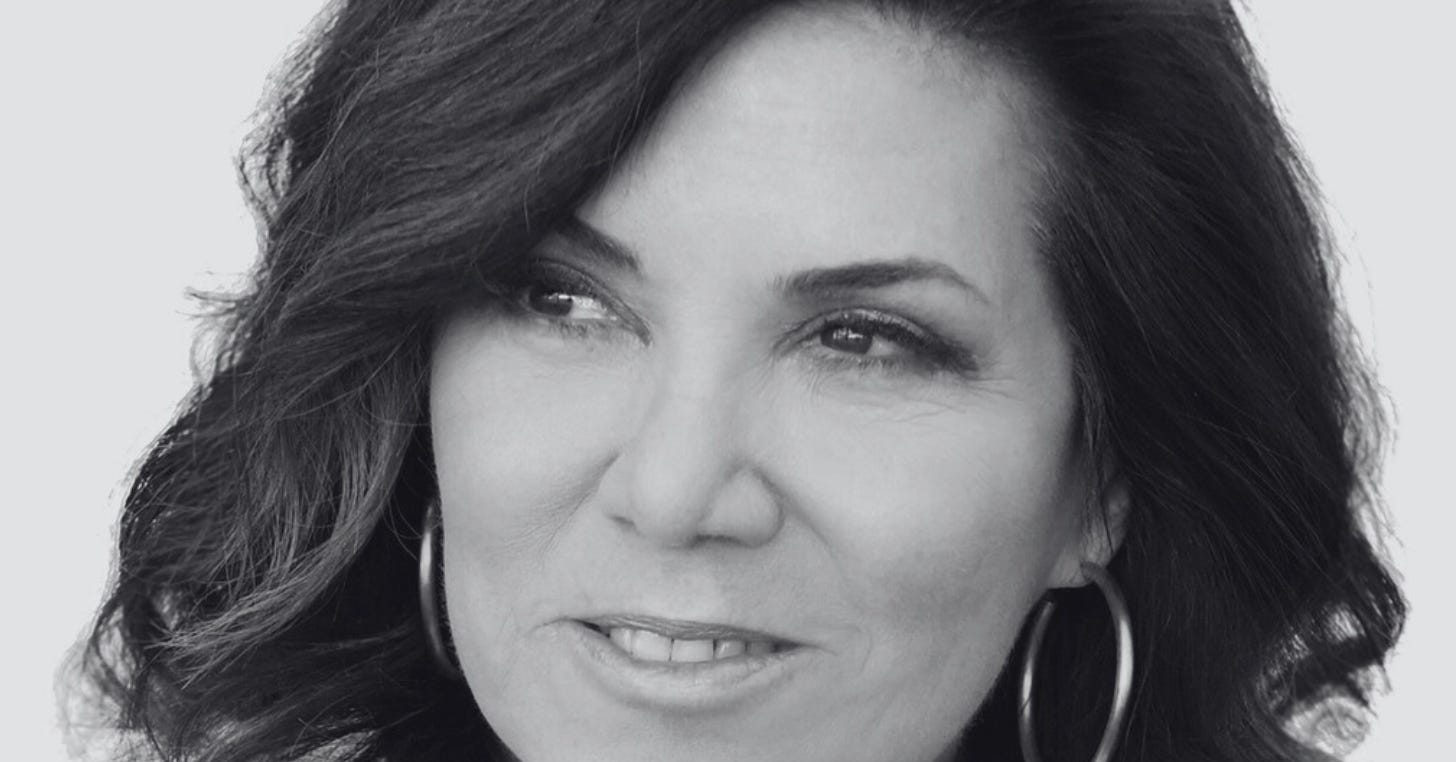
Editor’s note: This is part one of a two-part analysis of Michele Tafoya’s U.S. Senate candidacy.
This first post focuses on character, specifically how Tafoya talks about other people’s pain, how she processes trauma, and what that reveals about her leadership instincts.
The second post examines her policy record and where her stated positions diverge from her party’s positions, how she has reversed herself on major issues, and what her own public statements reveal about her political judgment.
Taken together, these pieces tell a simple story: Tafoya may have name recognition, but once voters get past that and begin to understand her character and her record, even as much of it has been quietly scrubbed from public view, she looks like a weak candidate.
Not just politically.
On paper.
Name ID can get you noticed. It doesn’t carry you across the finish line.
I believe that when voters are finally presented with the full picture, Tafoya’s path to winning a U.S. Senate race becomes very narrow.
Empathy matters in politics, especially when candidates talk about issues that intersect with loss, mental health, and reproductive decisions.
Voters don’t expect perfection.
They do expect judgment, restraint, and basic humanity.
Michele Tafoya often presents herself as a pragmatic moderate on abortion. She calls herself “pro-choice to a point.” She warns Republicans about alienating women voters. She frames abortion as a political liability that politicians, especially Republicans, must manage carefully.
But when you look closely at her own words, across podcasts and interviews, a pattern emerges.
In some of her most revealing moments, Tafoya responds to people describing deeply personal pain not with empathy, but with skepticism and judgment.
That’s not simply a policy difference.
It’s a leadership question.
She Questions Another Person’s Pain
One of the clearest examples comes from Tafoya’s response to former Monday Night Football reporter Lisa Guerrero.
After Guerrero revealed she had suffered a miscarriage during a live broadcast years earlier, Tafoya did not lead with sympathy. Instead, she publicly questioned in a podcast episode about whether the miscarriage was “truly devastating,” noting that Guerrero had not told friends at the time and waited years to speak about it.
Tafoya compared Guerrero’s experience to her own miscarriages and suggested there was a “disconnect.”
That framing will matter to voters.
Tafoya was not only disputing whether Guerrero had a miscarriage, but was also evaluating Guerrero’s emotional response, measuring it against her own experience, and finding it insufficient or possibly even dishonest.
But trauma does not follow a uniform script. There is no approved timeline for grief. Dismissing someone’s account because it doesn’t mirror your own is not analysis. It is a public shaming.
Tafoya has spoken openly about her own struggles with infertility and miscarriage, experiences that are deeply personal and real. But having endured loss does not grant a license to serve as a fact-checker as to whether a woman suffered a miscarriage and judge how others process theirs.
Guerrero handled the appalling attacks by Tafoya with tremendous grace. In an interview about Tafoya’s “attacks,” Guerrero said, “Well, I’ve never met the woman…I was very surprised,” adding, “I hope that she reads the book and I wish her well.”
Toughness Over Compassion
If that incident stood alone, it could be dismissed as blunt commentary.
It does not.
In her broader response, Tafoya repeatedly framed Guerrero as weak, dramatic, and attention-seeking. She emphasized that early pregnancy loss is common. She returned again and again to a familiar theme: you either cut it, or you can’t.
That mindset may have currency in competitive broadcasting. But it translates differently in public life, particularly when the subject is a personal crisis.
The instinct, again, is interrogation before understanding.
She Dismisses Suicidal Ideation
The pattern continues with Tafoya.
In the same episode, she addressed Guerrero’s admission that she had contemplated suicide during that period of her life.
Rather than responding with restraint, Tafoya questioned how someone who was engaged and professionally successful could feel suicidal, suggesting the crisis did not align with the outward facts of Guerrero’s life.
That reaction is revealing.
Depression can coexist with outward success. That is not political framing; it is a widely recognized reality. When someone says they were suicidal, a public leader’s instinct matters. Seriousness and care are baseline expectations.
Here again, Tafoya’s response was skeptical and inhumane.
Now Apply That Lens to Abortion
This matters because abortion debates do not exist in a vacuum. They intersect with medical emergencies, financial instability, and deeply personal family decisions.
Tafoya deserves credit for acknowledging abortion’s political complexity. She calls herself “pro-choice to a point.” She criticizes Republicans for absolutism. She warns that abortion is pushing young women away from the GOP.
But Tafoya’s framing is revealing.
She spends far more time discussing messaging, polling, and electoral math than the human complexity behind the issue. Abortion is treated primarily as a strategic problem Republicans need to solve.
The political stakes are not abstract.
Recent Gallup polling shows that Americans’ views on abortion remain nuanced rather than absolutist.
As of mid-2025, 30% of U.S. adults say abortion should be legal under any circumstances, 55% say it should be legal under certain circumstances, and 13% say it should be illegal in all cases. A slim majority now identify as “pro-choice,” while 43% say they are “pro-life.”
These findings reflect a continued preference among many Americans for a middle ground on legality rather than blanket positions.
Even when Tafoya supports abortion access, she frames it through optics, as something campaigns must manage, rather than through the lived realities of families navigating it.
Viewed alongside her response to miscarriage and suicidal ideation, a consistent posture emerges: analysis first, empathy later, but maybe.
The Leadership Question
You do not need to share someone’s experience to evaluate how a public figure responds to it.
Leadership is not only about where someone lands on policy. It is about instinct: how elected leaders react when confronted with loss, crisis, or vulnerability.
Across multiple examples, Tafoya’s record shows a consistent pattern:
She questioned a miscarriage.
She minimized trauma.
She framed suicidal ideation as inconsistent with outward success.
She treats abortion primarily as a political management issue.
This is not about ideology or party orthodoxy. It is about being human.
When a candidate’s default posture toward people describing a crisis is skepticism, voters are entitled to ask a simple question:
What does that mean for leadership when the stakes are no longer rhetorical, but real?
I launched On The Record to create space for deeper analysis—unscripted, subscriber-first, and brutally honest.
👇 Here’s how you can help:
💬 Leave a comment – What stood out? What needs more attention?
📣 Share this post – Help grow our community.
🔒 Become a paid subscriber – Support thoughtful, independent political analysis.